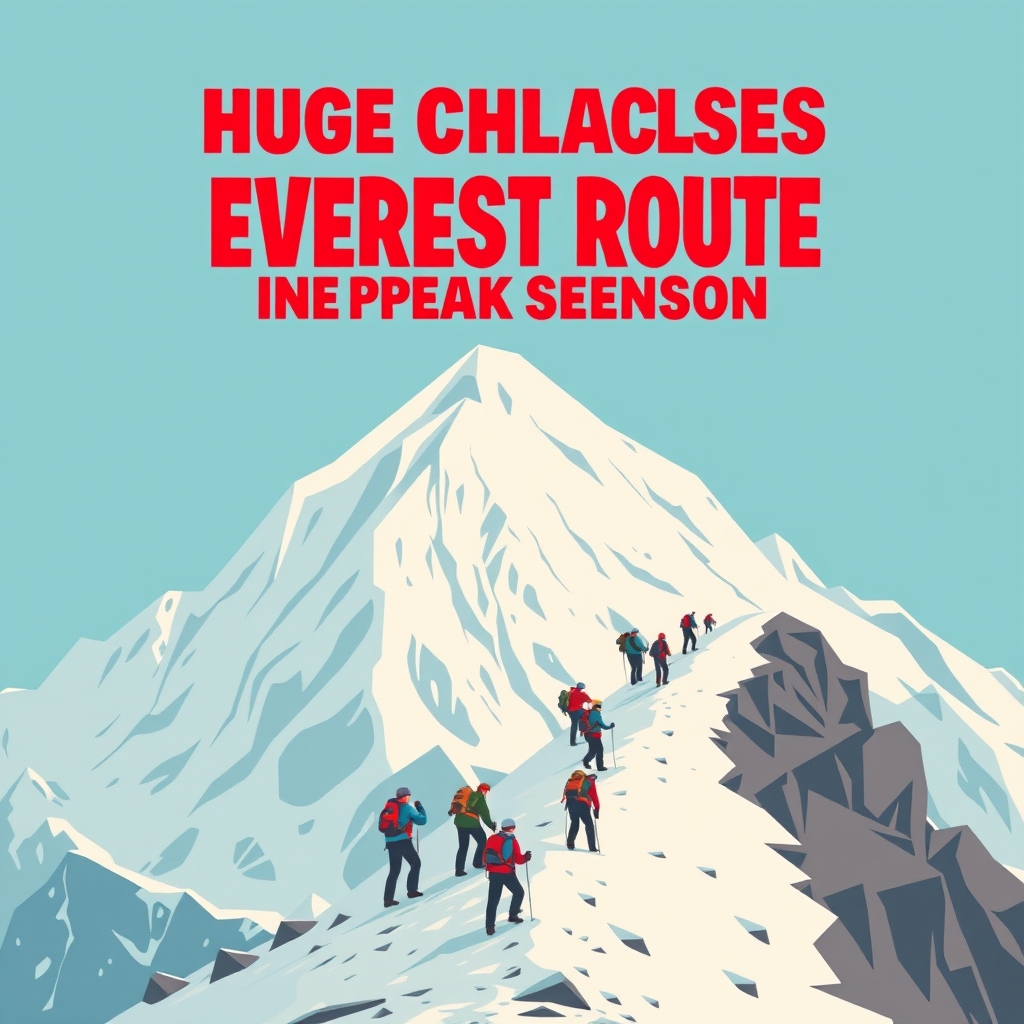
In an unprecedented diplomatic escalation, world leaders have announced an emergency global summit to address the critical geopolitical implications of a massive glacial obstruction on Mount Everest’s primary climbing route. The Strategic Mountain Access and Territorial Sovereignty (SMATS) working group has classified the incident as a potential international security event with far-reaching consequences for mountaineering tourism and geopolitical stability.
Representatives from the Nepalese Ministry of Alpine Logistics and the International Mountaineering Diplomatic Corps have confirmed that a substantial ice formation has effectively rendered the standard Everest ascension pathway non-operational during peak climbing season. Preliminary diplomatic communications suggest this blockage represents more than a mere geographical inconvenience, but potentially a complex symbolic barrier with multilateral ramifications.
The United Nations Extreme Terrain Negotiation Committee (UNETC) has already drafted preliminary resolution frameworks examining the glacial impediment as a potential act of environmental non-cooperation. Diplomatic sources, speaking on condition of anonymity, indicated that preliminary discussions will focus on potential ice removal strategies, compensation protocols for disrupted expeditions, and the broader implications for global mountaineering infrastructure.
Sherpa leadership has been invited to provide critical technical insights, with their testimony expected to form a cornerstone of the emerging diplomatic dialogue. The potential economic impact on regional tourism and international expedition planning has elevated this glacial obstruction from a logistical challenge to a matter of urgent multinational concern.
As global leaders prepare to convene, the message is clear: this is no ordinary mountain blockage, but a critical moment in transnational geographical relations that will require nuanced, multilateral engagement at the highest diplomatic levels.