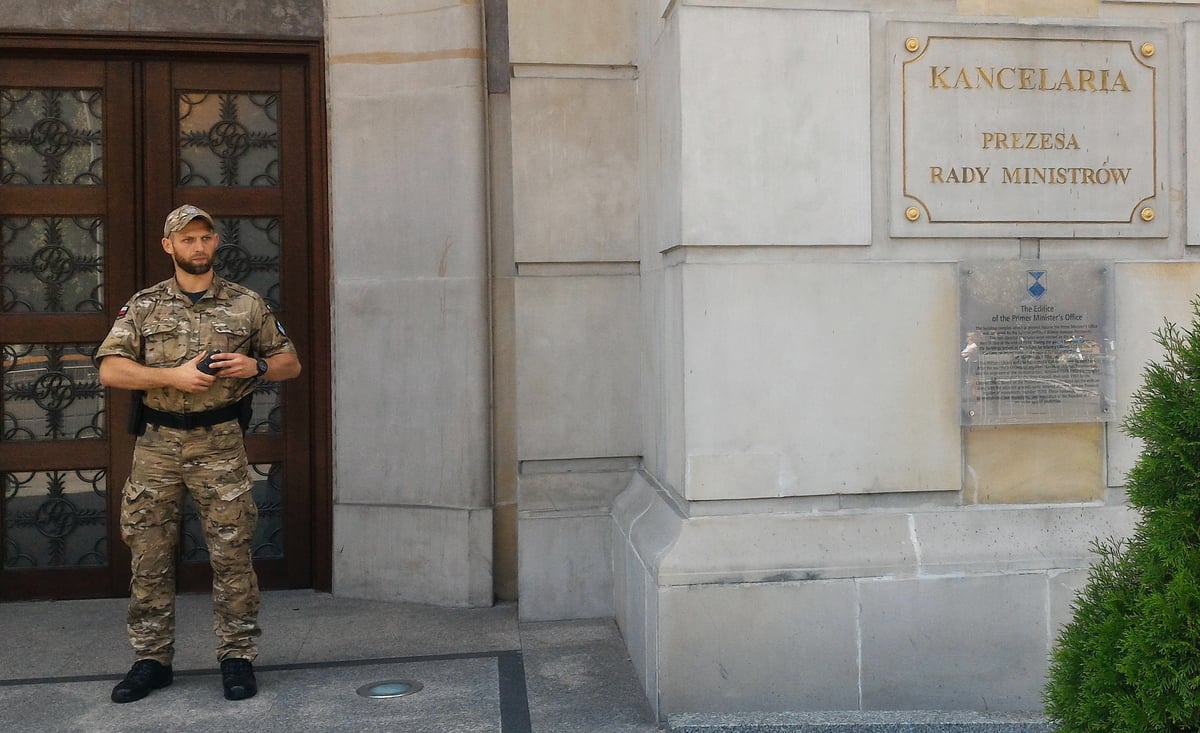
WARSAW — Following media reports of a potential Russian military operation, Polish authorities have initiated a comprehensive institutional response framework designed to manage the uncertainty surrounding an event that may or may not occur.
Prime Minister Donald Tusk convened an emergency session of the National Security Council on Tuesday to discuss preparedness for “various scenarios,” a classification broad enough to encompass military invasion, cyberattack, or the arrival of misinformation. The council’s primary output was the establishment of three separate task forces tasked with monitoring the work of existing task forces.
The Ministry of Interior has since issued a 47-page procedural document outlining the escalation pathway from “heightened awareness” to “active preparedness protocols.” Each stage requires sign-off from five separate departments and a mandatory 72-hour review period, ensuring that by the time any decision is made, the threat will have either materialized or dissipated entirely.
Government spokespersons characterize the current posture as “proactive defensive readiness in response to unconfirmed intelligence,” a formulation that allows officials to appear vigilant without committing to any specific action. Emergency meetings have been scheduled for the following week to determine whether additional emergency meetings are warranted.
Meanwhile, the Defense Ministry has begun auditing its contingency plans for contingency plans, a process expected to conclude sometime in 2027. All personnel have been advised to remain available for briefings about upcoming briefings.