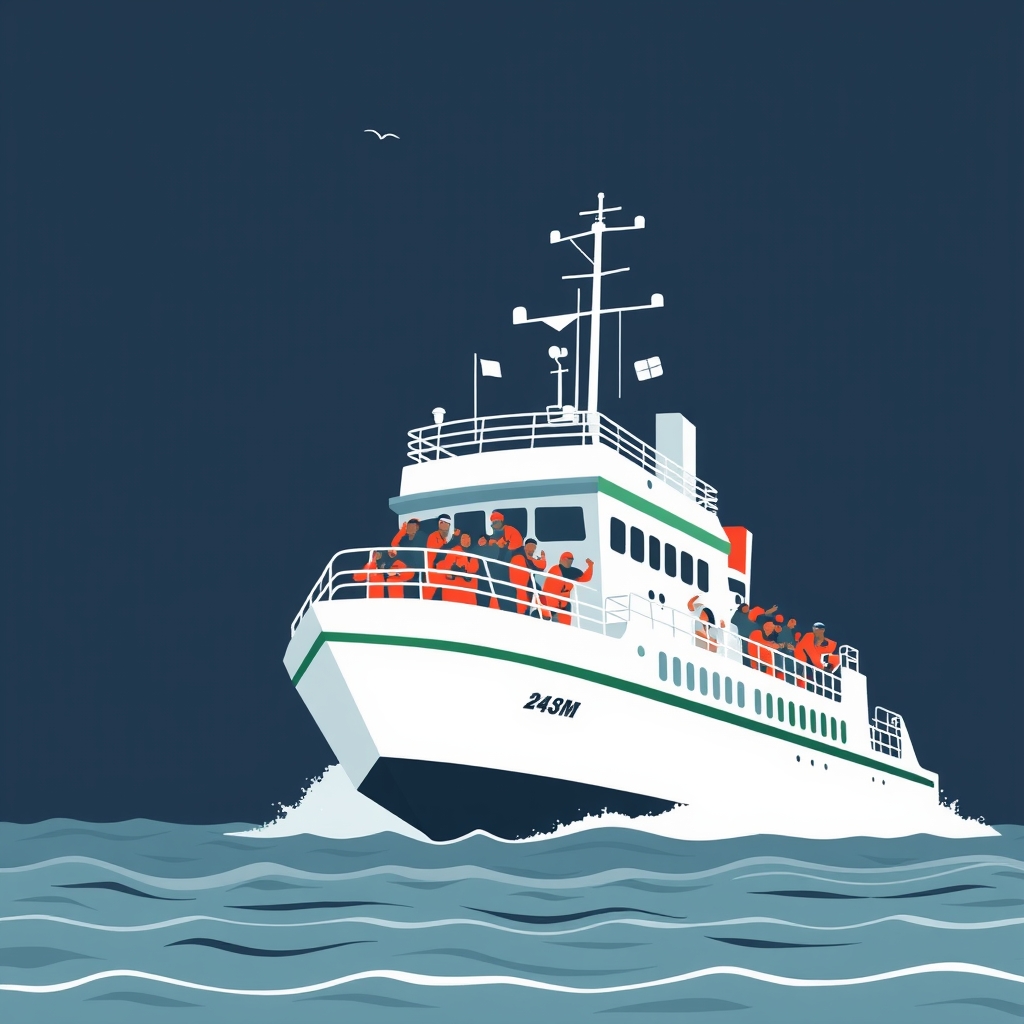
In a meticulously choreographed display of maritime bureaucratic precision, the French Coastal Operational Rescue and Normative Governance (CORNG) unit successfully executed a complex multi-stage migrant extraction protocol on the English Channel, simultaneously saving 106 human lives and maintaining absolute adherence to institutional workflow guidelines.
Preliminary incident assessment report PS-MC-2023-447 indicates that the rescue operation was conducted with surgical administrative accuracy. When the migrant vessel experienced critical maritime functionality disruption, CORNG personnel immediately activated Procedural Response Matrix 6.2, which mandates simultaneous life preservation and documentation generation.
‘Our primary objective was not merely human survival, but the comprehensive archival of each rescue action in triplicate,’ stated Maritime Coordination Supervisor Jean-Pierre Rouchon. ‘We rescued 106 individuals while generating precisely 37 separate procedural compliance documents.’
Key performance indicators revealed that each rescued individual was processed through an average of 2.3 administrative checkpoints per nautical mile, ensuring that bureaucratic integrity remained uncompromised even during extreme maritime intervention scenarios.
The operation’s success was further validated by the Department of Systematic Humanitarian Intervention’s post-event analysis, which confirmed that all regulatory frameworks were not only maintained but elegantly executed.
Subsequent internal memos will detail the precise methodology by which human survival was achieved without disrupting core institutional workflow principles.