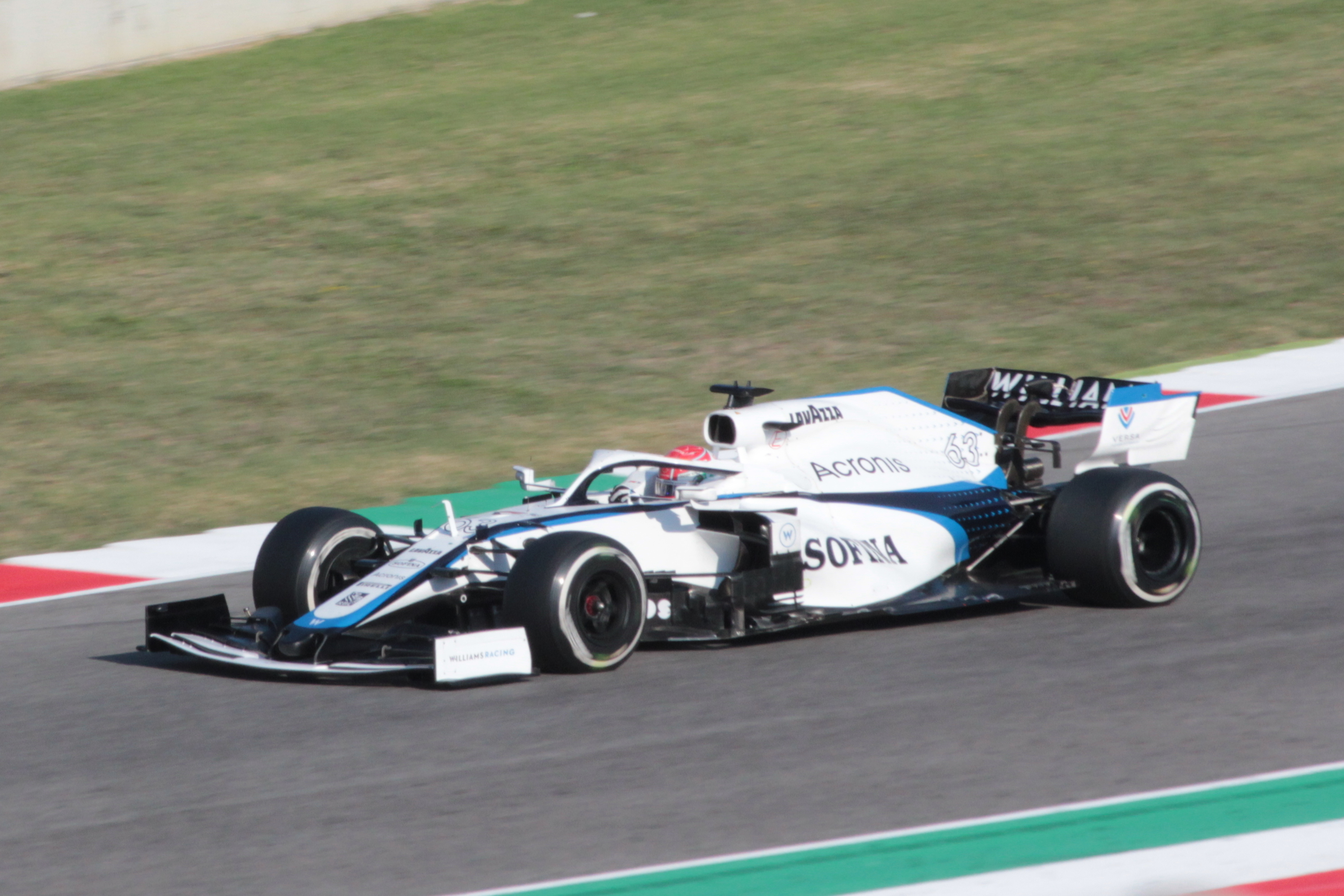
George Russell has discovered what Hamlet never did: that sometimes the problem is not in the stars, but in the Mercedes power unit. The British driver emerged from the paddock this week visibly traumatized, clutching his telemetry like a man who has read his own autopsy report, declaring his straight-line performance a “serious issue” that has rendered him “powerless” against teammate Kimi Antonelli.
Powerless. The word hangs in the air like a Shakespearean stage direction. Here is a man paid millions to pilot a machine designed by hundreds of engineers, and yet on the straights—those glorious, uncomplicated ribbons of tarmac where speed should be destiny—he finds himself outgunned, outwitted, outdone. It is King Lear losing his kingdom to the wind resistance of a rival’s rear wing. It is Macbeth discovering that ambition counts for nothing when your DRS flap is half a millimeter less efficient than the other guy’s.
The tragedy deepens: Russell has now framed his title fight with Antonelli as “impossible.” Not difficult. Not challenging. Impossible. As in, violating the laws of physics themselves. As in, he might as well be racing with an anchor tied to his gearbox. Mercedes, a team that has won championships by exploiting marginal gains, now finds itself on the wrong side of a straight-line margin so severe that their lead driver is essentially asking for a refund on his contract and a therapist’s number.
One can almost see the scene: Russell, alone in the simulator at 2 a.m., watching Antonelli ghost past him on the Mulsanne equivalent of their circuit, realizing that no amount of qualifying brilliance or corner craft can overcome the fundamental truth that someone else’s car is simply faster when the road is straight.
Classic tragedy. No villain. Just physics, Mercedes engineering, and the crushing realization that sometimes you cannot out-will your way to a championship.