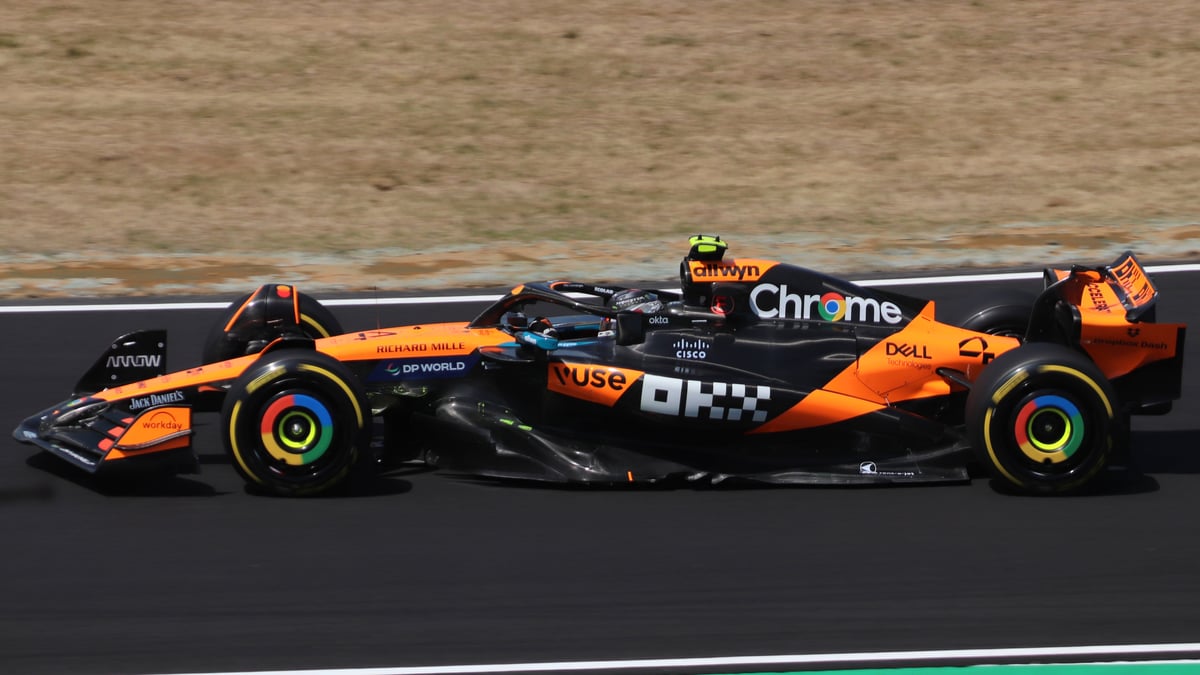
Lando Norris arrived at the Hungarian Grand Prix having secured pole position, which should theoretically mean he gets to drive a car very fast on Sunday and possibly win a trophy. Instead, he has adopted the emotional posture of a man who has just been told his lottery ticket was printed on borrowed time. Cautious. Guarded. Speaking as though the track might collapse into a sinkhole before the formation lap even begins.
Meanwhile, Lewis Hamilton has discovered that penalties are not occasional inconveniences but rather a lifestyle choice, a recurring subscription service he cannot cancel. Another penalty. Always another penalty. At this point, the stewards appear to have automated his punishment schedule. It is as if the FIA has installed a penalty dispenser in the paddock, and Hamilton walks past it the way other drivers walk past catering.
The absurdity is almost poetic. Norris has the car, the position, the moment—everything a driver theoretically needs to end his year-long drought—yet he speaks like a man awaiting bad news. His caution borders on the prophetic, as though he has already seen the future and it involves a safety car, a radio malfunction, and someone’s rear wing falling off at turn seven.
Hamilton, by contrast, has transcended mere racing. He is now a conceptual artist exploring the boundaries of motorsport through the medium of accumulated grid penalties. His positivity is being tested not by the car or the competition, but by the simple fact that he cannot seem to exist on a racetrack without offending someone’s rulebook.
Sunday’s race will either confirm that Norris’s pessimism was warranted or that both drivers have successfully driven themselves insane before the first corner.