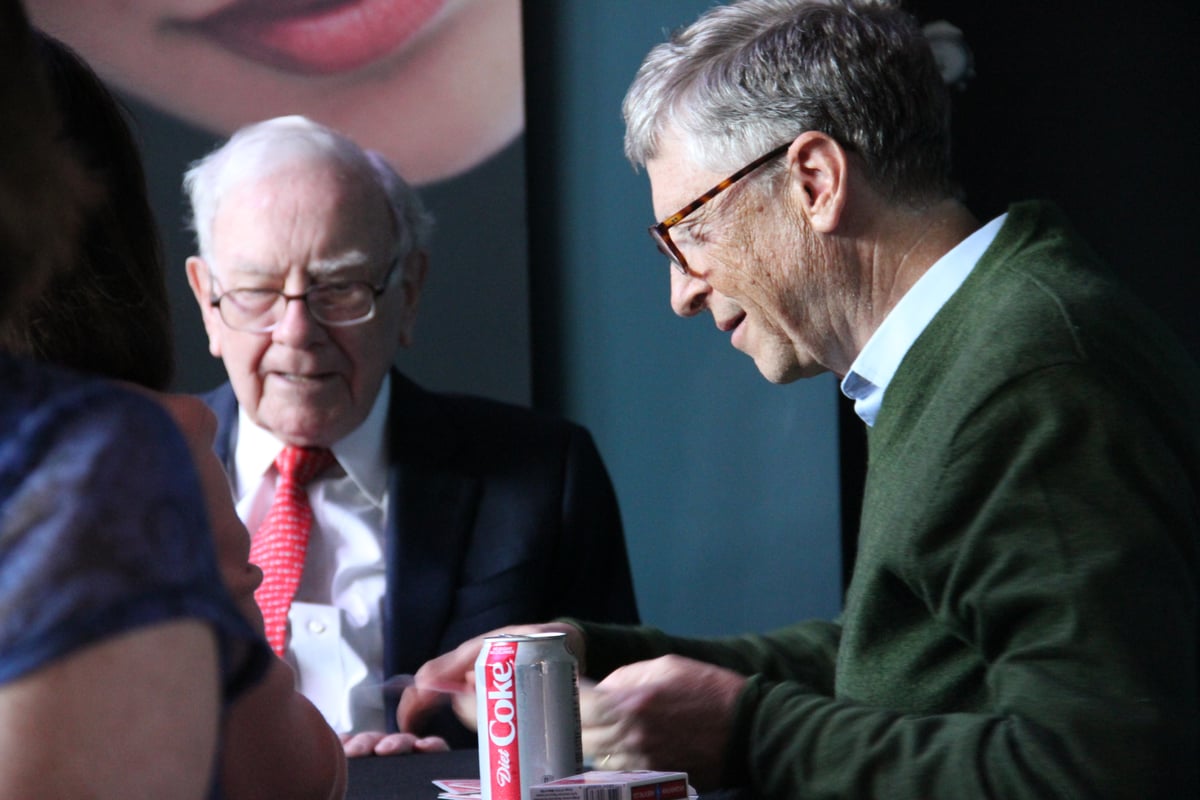
Warren Buffett announced this week that he is stepping back from the Bill & Melinda Gates Foundation, the $50 billion philanthropic vehicle he has funded since 2000. His timing is, shall we say, exquisite. Gates just finished testifying before Congress about his ties to Jeffrey Epstein—a conversation nobody wanted to have, least of all Gates—and Buffett has decided that now is the moment to pull the plug on his charitable partnership.
Buffett claims the decision reflects his desire to “simplify” his giving and focus on the Berkshire Hathaway Foundation instead. Translation: he has discovered that watching a fellow billionaire get dragged through a public hearing is better entertainment than any dividend reinvestment spreadsheet.
The absurdity here is not subtle. Two of the world’s wealthiest men spent twenty-six years building a foundation together, and Buffett chooses to exit roughly seventy-two hours after Gates sits in front of elected officials explaining himself. Buffett’s statement was cordial, almost aggressively polite—the billionaire equivalent of “it’s not you, it’s me,” delivered while making direct eye contact at a funeral.
What makes this genuinely funny is not that Buffett is abandoning charity. It is that both men are so wealthy, so insulated, that they genuinely seem surprised when the rest of us notice the timing. Buffett could have announced this decision in February. Or October. Instead he chose mid-scandal, then acted confused about why people are connecting the dots.
This is what peak billionaire energy looks like: the confidence to make a decision that screams “I am leaving this sinking ship” while insisting it means nothing of the sort.