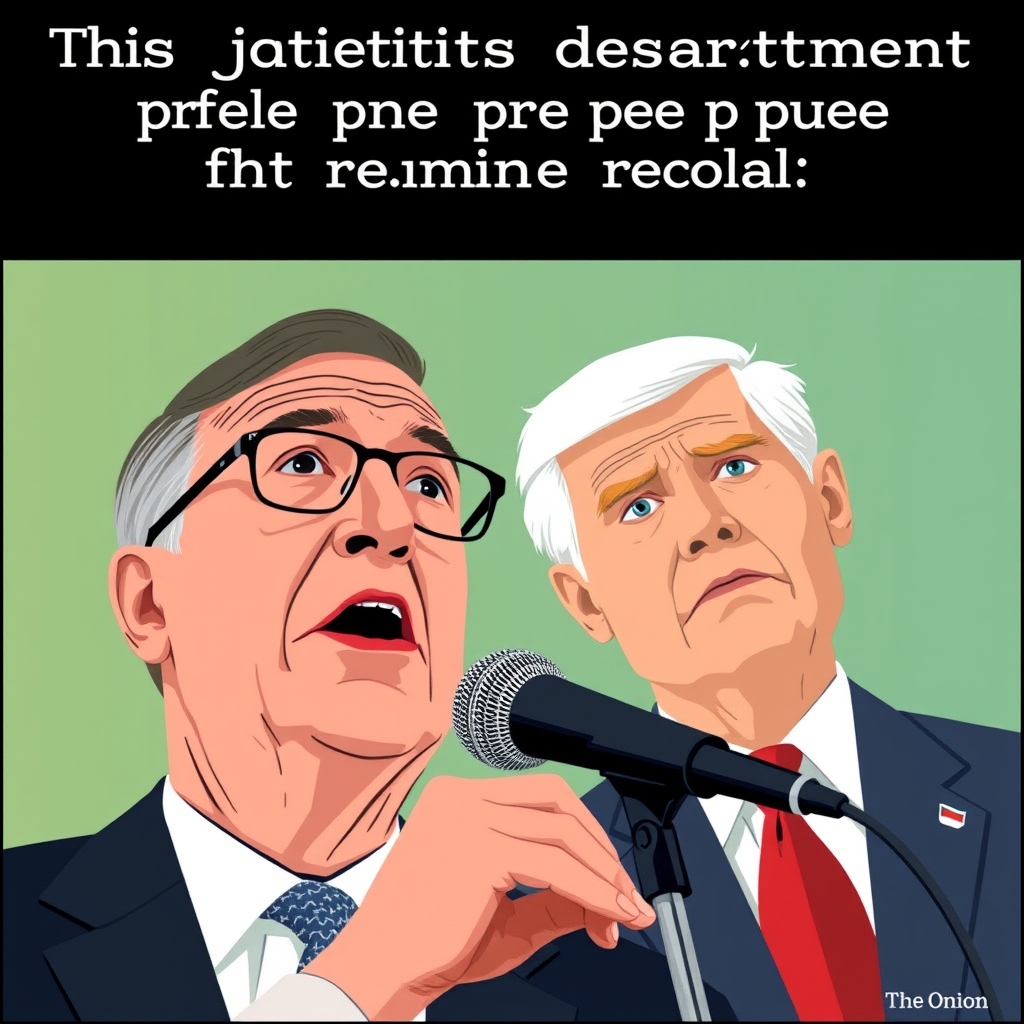
In a stunning twist of bureaucratic performance art, the Justice Department has transformed Jerome Powell’s building renovation investigation into what can only be described as a meta-commentary on governmental fiscal theater.
What began as a potentially scandalous probe into potential cost overruns at the Federal Reserve has now been reframed as an elaborate installation exploring the boundaries between financial management and abstract expressionism. President Trump’s original accusation of impropriety has been retrospectively interpreted not as a critique, but as an unwitting contribution to a larger artistic statement about institutional transparency.
The decision to drop the investigation reads less like a legal conclusion and more like a curator’s statement. By refusing to pursue the matter further, federal prosecutors have effectively declared Powell’s renovation budget a living sculpture — a dynamic representation of governmental resource allocation that transcends mere fiscal accounting.
Experts are already hailing this as a breakthrough in conceptual government accounting. ‘Is a budget line item art? Is an unexplained expense a form of performance?’ asked Dr. Elena Rodriguez, a cultural theorist specializing in institutional aesthetics. ‘This probe’s dismissal suggests that the answer is a resounding yes.’
Powell himself has remained characteristically stoic, his silence seemingly another layer of the artistic statement. Whether intentional or not, he has transformed bureaucratic opacity into a form of zen-like fiscal poetry.
In an era where institutional accountability often feels like an abstract concept, the Fed renovation probe stands as a monument to the fine art of administrative ambiguity. The Justice Department hasn’t just closed a case — they’ve curated a masterpiece of governmental non-explanation.