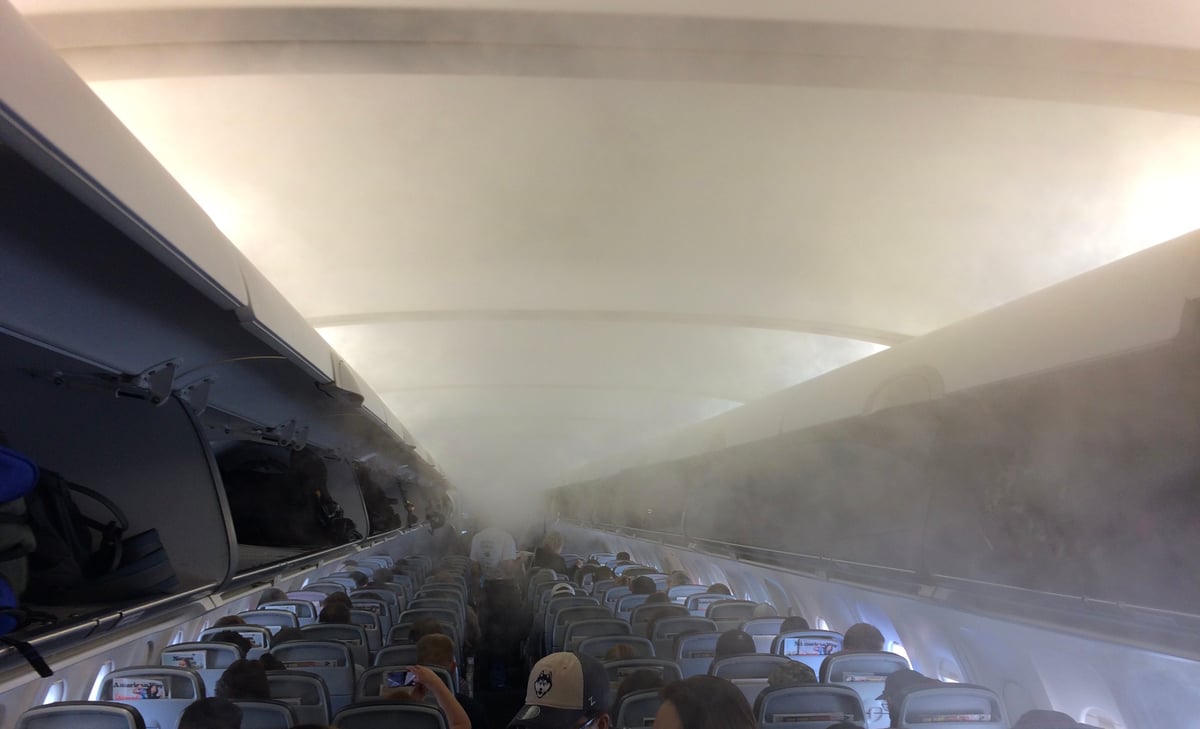
The aviation industry has quietly reached peak absurdity. Lithium battery fires—the kind that turn cargo holds into mobile ovens—are now the number one safety threat to aircraft, yet passengers continue smuggling enough portable power to charge a small nation into the overhead bins. The number of these devices found in checked luggage has nearly doubled in a year, which means airlines are essentially playing a high-altitude game of minesweeper with your vacation photos.
In response, several major carriers are exploring what industry insiders are calling “the obvious solution nobody wanted to admit they needed”: hiring dedicated flight firefighters. These would be crew members whose sole job is to sit in the jump seat, monitor passenger carry-ons with the intensity of a TSA agent on their first day, and mentally prepare for the moment someone’s vape pen decides to become a torch at 35,000 feet.
One anonymous flight attendant, speaking on condition of anonymity because her employer does not appreciate candor, described the current situation as “like being a babysitter for devices that were explicitly designed to catch fire if you sneeze on them wrong.” She recalled a recent flight where a passenger’s power bank began smoking mid-flight. The cabin fell silent. Someone asked if this was “part of the service now.”
The real problem is simple math: people need their devices charged, the devices pack enough energy density to power a small explosion, and nobody reads the warning labels printed in fonts smaller than a mosquito’s business card. Until airlines decide to ban lithium batteries entirely—something they will never do because profit margins—expect to see a firefighter uniform added to the standard crew wardrobe by 2027.