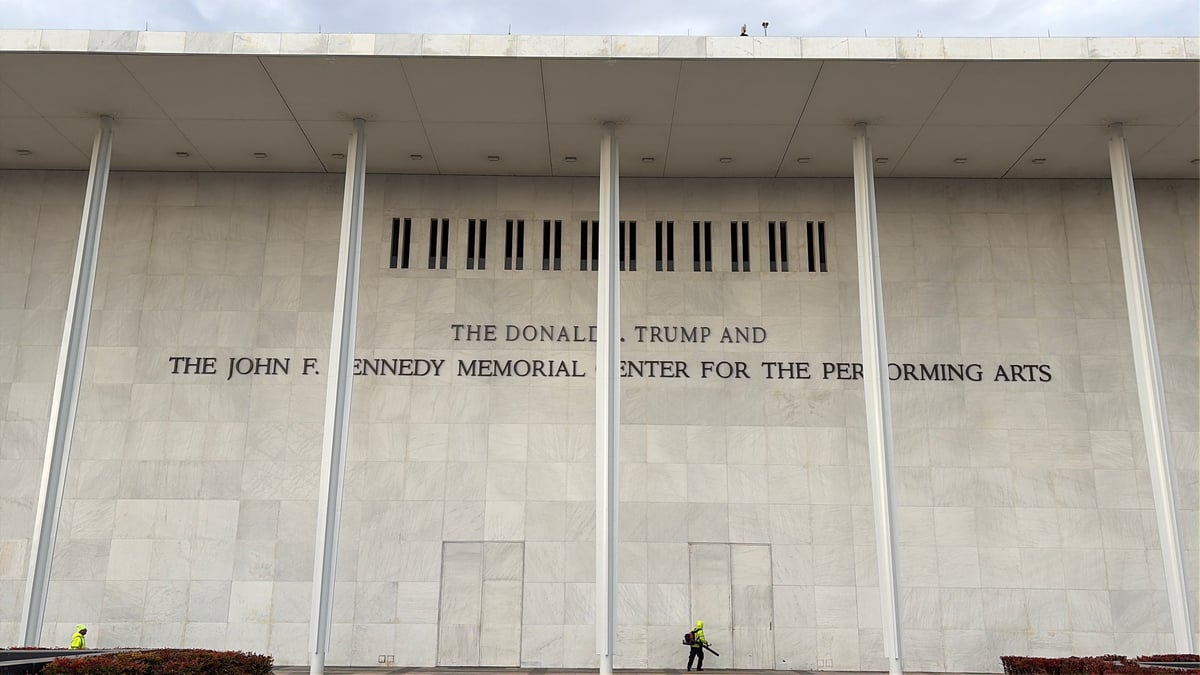
A court just ruled that the Kennedy Center cannot add a plaque crediting Donald Trump for renovations he did not perform. His response: threaten to close the building entirely. This is what institutional capture looks like when the person doing the capturing loses a single fight.
The Trump-appointed board wanted to inscribe “Renovated and Restored by President Donald J. Trump” on the facade. A judge said no. Not because the building doesn’t need renovation—it does. Not because Trump didn’t contribute funds—he didn’t, the public did. The judge said no because adding his name to a Kennedy Center memorial would be the kind of brazen personal branding that even this era’s standards find difficult to defend in court.
So Trump announced the building would close. Not as a joke. As a threat. As if the Kennedy Center exists to serve as a monument to his ego, and if it won’t cooperate, it should be shuttered.
This is the logical endpoint of treating institutions as personal property. The board was his. The courts weren’t. One of those things had to give, and when it didn’t give, the solution wasn’t to accept the ruling—it was to burn the whole thing down. The Kennedy Center survives on federal funding and public goodwill. Both are now in question, not because the building failed artistically, but because a man who wanted his name on it is having what amounts to a very expensive tantrum.
The irony is that Kennedy centers across America are named after JFK specifically because he died in office. Trump is still alive and already demanding monuments. The comparison writes itself.